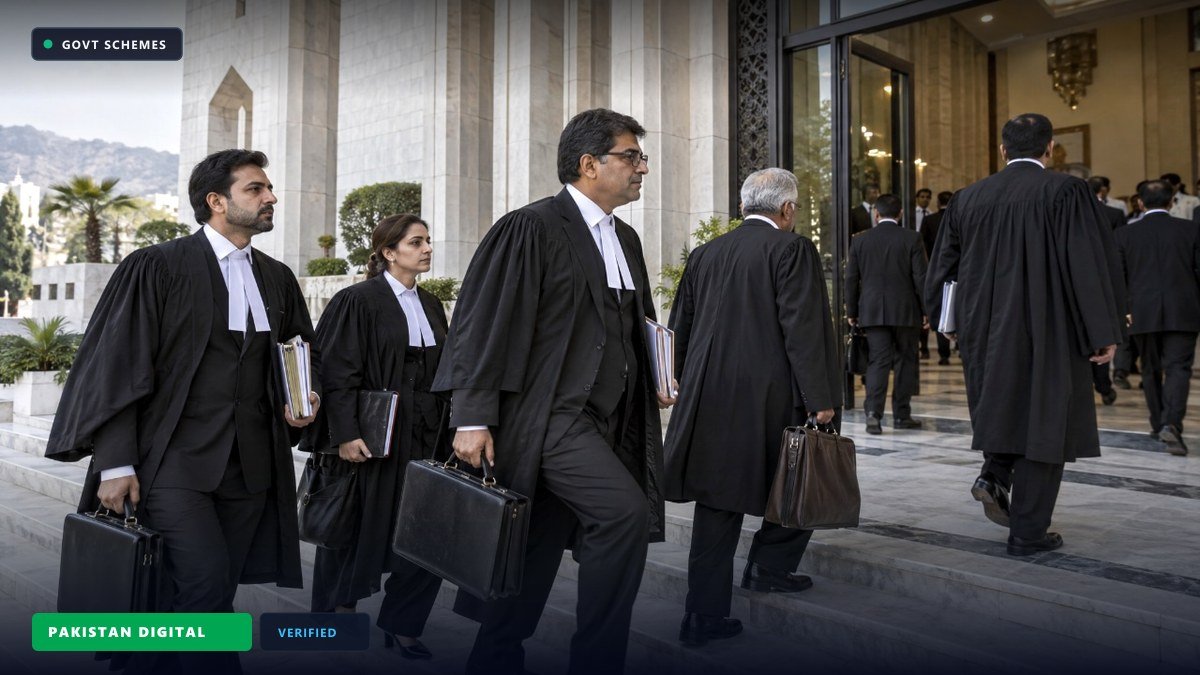
Wearing gowns has been made mandatory for lawyers appearing before the Islamabad High Court (IHC). The IHC Deputy Registrar issued an office order on the directives of the Chief Justice.
According to the office order, lawyers have been directed to appear in gowns while pursuing cases from November 15 onwards, until further orders.
The legal and procedural framework governing this matter underscores the critical importance of constitutional due process, judicial impartiality, and statutory compliance within Pakistan's judicial ecosystem.
Superior courts and competent adjudicating forums have continually held that administrative actions and prosecutorial requests must conform strictly to recognized standards of evidence, fair trial safeguards, and human rights benchmarks.
Legal practitioners and constitutional scholars point out that institutional adherence to statutory parameters remains essential to maintaining public confidence in the judicial process.
In addition to the immediate merits of the proceedings, judicial authorities emphasize that procedural integrity and transparent hearings are vital for safeguarding institutional decorum.
Relevant oversight bodies, bar associations, and statutory ombudsmen maintain rigorous vigilance over regulatory processes to guarantee that statutory safeguards are observed without arbitrary deviation.
Transparent judicial functioning is recognized by constitutional authorities as the bedrock of legal certainty and equitable public administration.
Legal analysts and senior advocates recommend that stakeholders and affected parties closely follow official court circulars, authenticated judicial transcripts, and certified case listings released through official registry desks.
Citizens and interested observers are advised against relying on unverified claims or circulating speculation on digital platforms, and are urged to verify case progress through official departmental bulletins and accredited legal counsel.