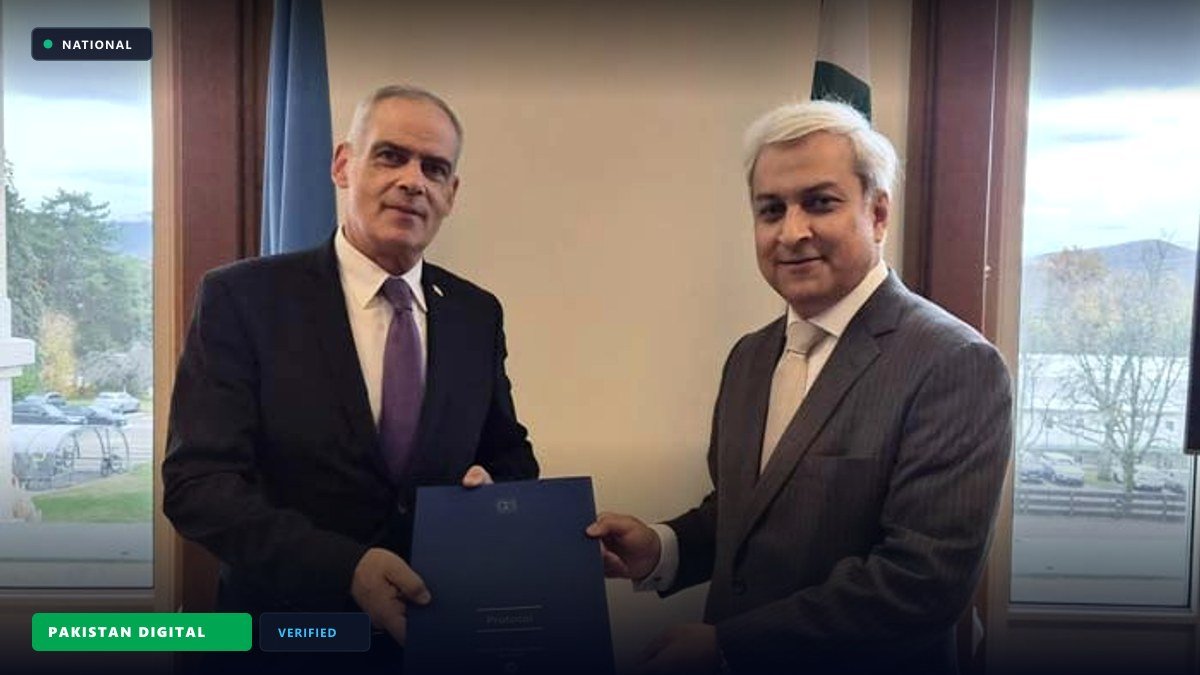
DUBAI: In an unusual diplomatic encounter, Israeli Ambassador Jonathan Peled presented his credentials to Pakistan's ambassador to the United Nations in Geneva, Tahir Hussain Andrabi, despite the absence of formal diplomatic relations between the two countries.
The encounter is particularly notable because Israel and Pakistan do not maintain formal diplomatic relations.
Yet, in his capacity as president of the multilateral disarmament forum, Tahir Andrabi receives diplomats representing participating countries, including Israel.
The encounter took place within the framework of the United Nations' multilateral diplomacy, where representatives of countries without bilateral ties can engage in official proceedings and interact through international institutions.
The diplomatic encounter carries an additional coincidence: both Peled and Andrabi have served as spokespeople for their respective foreign ministries.
Tahir Andrabi previously served as spokesperson for Pakistan's Foreign Office before taking on senior diplomatic responsibilities, including Additional Foreign Secretary for Arms Control, Disarmament and International Security.
He has also served as Pakistan's ambassador to Tunisia and Malta, with diplomatic postings in Beijing and New York.
Peled is a senior Israeli diplomat who has held several diplomatic positions, including serving as spokesperson for Israel's Foreign Ministry.
Pakistan held the rotating presidency of the Conference on Disarmament from August 17 to September 11, 2026.
Under the forum's arrangements, Pakistan continues to discharge the relevant presidential responsibilities pending the next rotation in 2027.
Public policy specialists and governance analysts view structured administrative initiatives as critical building blocks for institutional efficiency, social equity, and public welfare across Pakistan.
Coordinating policy execution across federal divisions, provincial secretariats, and local directorates ensures that state directives achieve tangible community benefits while maintaining strict operational transparency and budgetary accountability.
Administrative oversight bodies and public monitoring departments are actively deploying digitized service desks and computerized verification systems to streamline public service delivery.
By removing procedural bottlenecks and integrating transparent verification mechanisms, public institutions are working to ensure that civic facilities, developmental benefits, and state safeguards are accessible to all citizens without unnecessary bureaucratic hurdles.
Citizens and civic stakeholders are encouraged to rely on verified government gazettes, certified departmental web portals, and official facilitation counters for authoritative information.
Administrative directorates emphasize that public inquiries, official feedback, and grievance redressals can be registered directly through official departmental helplines and established public service portals.