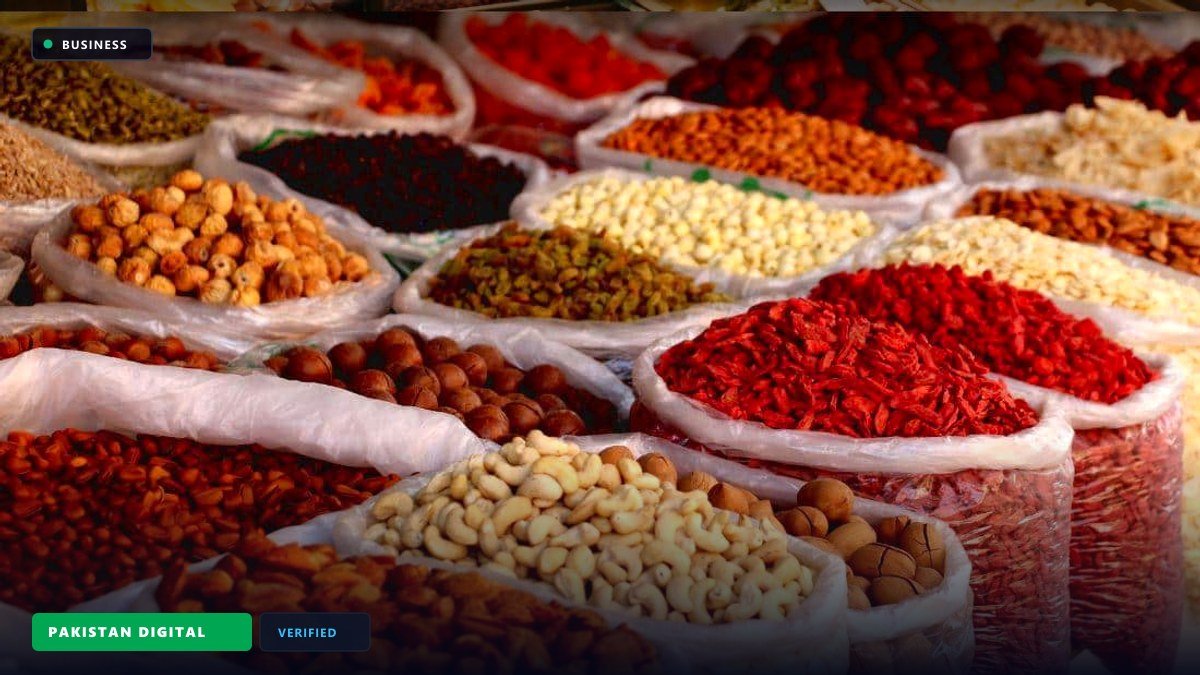
Pakistani households that buy premium dry fruits spend more than twice as much as those purchasing cheaper varieties, reflecting the significant price difference between the country's two major dry fruit categories.
According to Gallup Pakistan Digital Analytics' household consumption analysis based on the Household Integrated Economic Survey (HIES) 2024-25, households purchasing almonds, walnuts, pistachios and cashews spend approximately Rs.
800 during a typical two-week period. In comparison, households buying everyday dry fruits such as dried dates, peanuts, coconut and sesame spend around Rs. 350 over the same period. This means spending on premium dry fruits is approximately 2.
3 times higher than spending on cheaper varieties. The difference is also visible in the number of households buying each category. Only 7 percent of Pakistani households, equivalent to approximately 2.
7 million homes, purchased premium nuts during a typical two-week period. For everyday dry fruits, the purchase rate stood at 12 percent, covering around 4. 6 million households.
The spending difference comes against a wider income divide in Pakistan's dry fruit market. Among the wealthiest 20 percent of households, 15. 5 percent purchased premium nuts, compared with just 3. 6 percent among the poorest 20 percent.
Overall, Pakistani households spend an estimated Rs. 56 billion annually on premium nuts and another Rs. 42 billion on everyday dry fruits.
From an economic and commercial perspective, this development reflects dynamic market adjustments and regulatory coordination across Pakistan's financial and trade landscape.
Economic authorities, corporate oversight agencies, and market regulators maintain dedicated monitoring to stabilize commodity metrics, support corporate governance, and sustain investor confidence.
Strategic alignment between public fiscal measures and private sector initiatives remains central to boosting domestic industrial productivity and foreign exchange stability.
Financial analysts and market observers point out that transparent trading practices, formalized accounting frameworks, and reliable supply chains are essential components of long-term economic resilience.
Institutional investors and enterprise leaders are focusing on operational efficiency, digital financial technologies, and export diversification to navigate shifting macroeconomic conditions and global market pressures.
Business enterprises, institutional traders, and general consumers are advised to consult official regulatory notifications, verified market benchmarks, and authorized financial disclosures before finalizing major commercial decisions.
Official gazettes, state regulatory web portals, and certified commodity exchange records provide authentic references for transparent and compliant transactions.