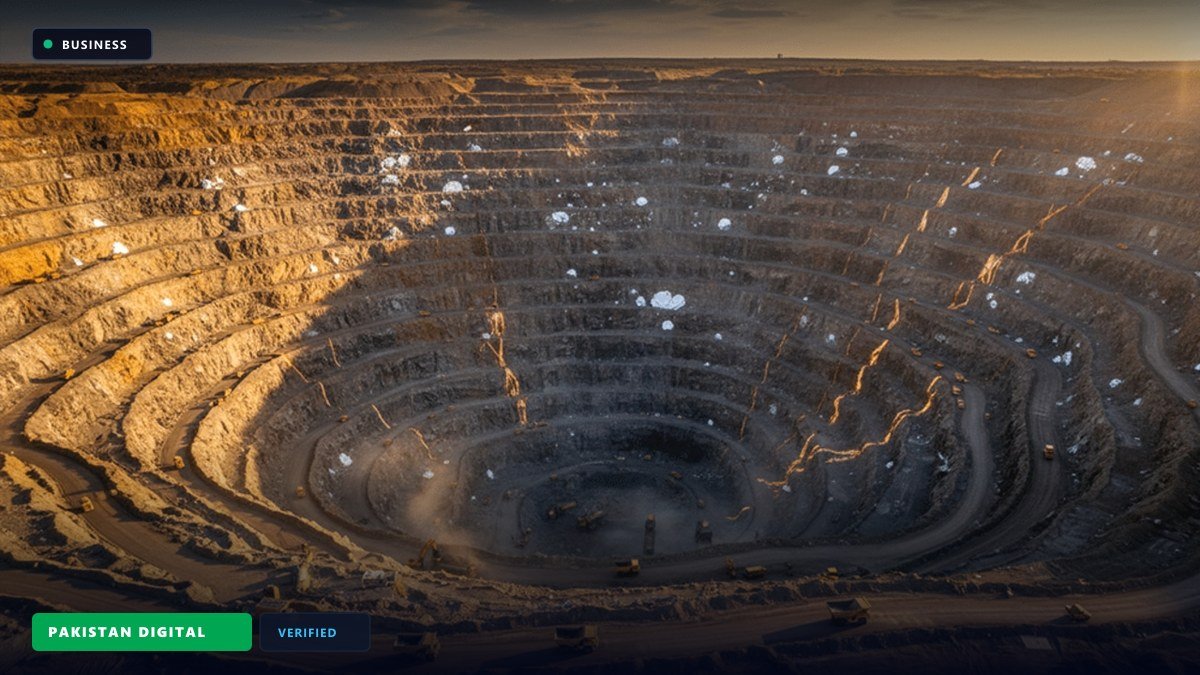
Pakistan's Reko Diq project has seen its estimated development cost jump 30 percent to $9.
1 billion from an earlier estimate of $7 billion, while initial production could be delayed by two years to 2030, according to a report published by the Institute of Cost and Management Accountants (ICMA).
The rising price tag and potential delays are increasing financial risks for three Pakistani state-owned enterprises (SOEs) that have committed approximately $1. 88 billion to the mining project.
The figures highlight the growing financial exposure of Oil and Gas Development Company Limited (OGDCL), Pakistan Petroleum Limited (PPL), and Government Holdings (Private) Limited (GHPL), which collectively own 25 percent of Reko Diq.
International mining company Barrick holds a 50 percent stake, while the Government of Balochistan owns the remaining 25 percent. Reko Diq&8217;s Development Cost Rises to $9.
1 Billion According to a report published by the Institute of Cost and Management Accountants (ICMA), the project's Phase I investment estimate has increased from $4 billion to $5. 6 billion, while Phase II costs have risen from $3 billion to $3.
5 billion. The project is designed around a 37 year mine life and a two phase development plan. Phase I is expected to process 45 million tonnes of ore annually, with capacity increasing to 90 million tonnes under Phase II.
Security Concerns Add to Project Delays The rising costs come as Reko Diq faces development uncertainty following security concerns in Balochistan.
Barrick initiated a review of the project in February 2026 and announced a slowdown in development in April, extending the review until mid 2027 to reassess security conditions, financing, capital requirements, and project timelines.
Initial production, originally targeted for the end of 2028, could now shift to 2030, although Barrick has not formally confirmed a revised production date.
The company has also cautioned that previously disclosed project costs and schedules could change, while estimates of additional capital requirements remain uncertain.
For Pakistan's participating SOEs, the delays could postpone dividend income, increase financing exposure, and raise the opportunity cost of committed capital.
The rising investment requirements also make cost controls, transparent monitoring, and timely project execution increasingly important.
Reko Diq Could Generate $74 Billion in Cash Flow Despite the financial risks, the project carries significant long term economic potential.
It is estimated to generate approximately $74 billion in free cash flow over its projected 37 year mine life, with peak construction employment of 7,500 workers and around 4,000 permanent jobs.
However, the projected cash flow should not be confused with revenue directly accruing to Pakistan.
Actual economic benefits will depend on ownership distributions, taxes, royalties, reinvestment, and the participation of domestic businesses in the project.
The development could strengthen mineral exports, generate government revenues, and create demand for local engineering, construction, transportation, and maintenance services.
Workforce training could also improve technical capabilities and create opportunities beyond the mine's operating life.
Domestic Processing Remains a Major Challenge The report highlights that Reko Diq is currently designed to produce copper and gold concentrate, with smelting and refining outside the project's existing scope.
This means domestic value addition is not guaranteed despite Pakistan's participation in the mining venture. Developing local processing capabilities would depend on commercially viable access to energy, infrastructure, technology, and markets.
Policymakers would also need to monitor local supplier participation, skilled employment, workforce training, government revenues, and opportunities for domestic processing.
Reko Diq represents a potential shift in how Pakistan's state owned enterprises participate in the economy, moving beyond traditional operations toward strategic equity investments alongside international companies.
However, the report argues that commercial viability must remain central to such decisions.
Transparent disclosure of capital commitments, independent oversight, regular financial and operational assessments, and clear shareholder accountability will be essential to ensuring that the project generates measurable economic returns rather than becoming another financial burden on public enterprises.