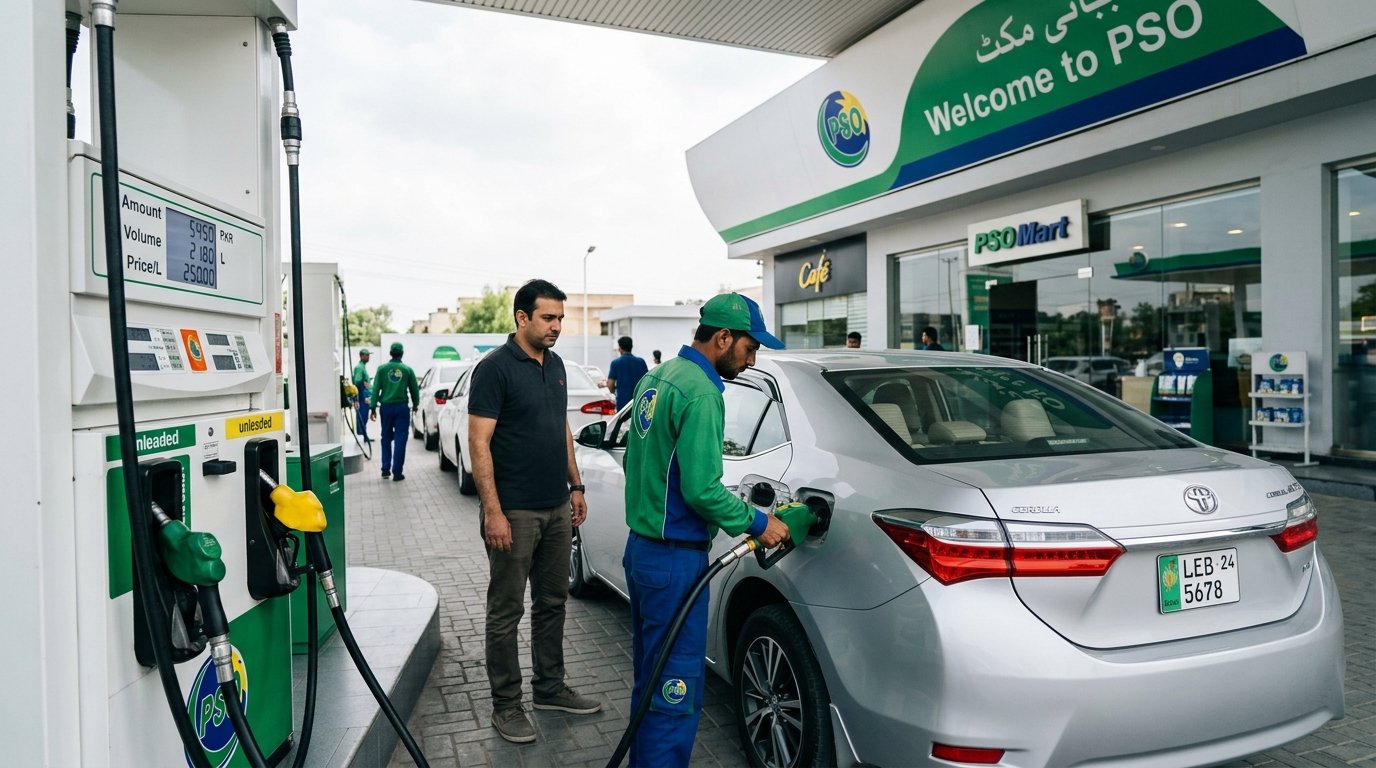
The retail price of petroleum products in Pakistan is poised for welcome relief as international crude benchmarks soften.
According to sources within the petroleum division and the Oil and Gas Regulatory Authority (OGRA), motor gasoline (Mogas) retail prices are anticipated to drop by up to Rs.
15 per liter in the upcoming bi-weekly revision, while High-Speed Diesel (HSD) could see a cut of Rs. 12 per liter.
Fuel rates play a pivotal role in Pakistan’s economy, as any downward adjustment directly mitigates transportation overheads, logistics freight costs, and the general price index of everyday agricultural and manufacturing commodities.
The government calculates these rates based on international import parity prices of refined petroleum shipments offloaded at Karachi port alongside foreign exchange rate stability.
Public transport unions, commuter associations, and trade bodies have welcomed the anticipated reduction, urging provincial transport authorities to mandate corresponding reductions in intercity and intra-city passenger fares so that the benefits of lower fuel tariffs flow directly to ordinary commuters.
Looking ahead, energy analysts note that maintaining consistent domestic refinery operations and upgrading strategic storage reserves will be essential to sustain energy price stability in upcoming quarters.
The automotive and urban mobility sector across Pakistan is undergoing progressive modernization driven by technological advancements, safety regulations, and environmental standards.
Transport authorities and industrial planning divisions are focusing on harmonizing local manufacturing standards with global benchmarks, such as international safety and emission protocols.
These structural shifts are engineered to enhance vehicle occupant safety, promote fuel conservation, and introduce cost-effective transit solutions tailored to local driving conditions.
Urban planners and mobility specialists emphasize that the integration of environmentally sustainable fleets, electric utility vehicles, and smart traffic management systems is essential for reducing urban congestion and airborne particulate emissions.
Provincial transit authorities are modernizing civic infrastructure with automated surveillance, computerized inspection centers, and dedicated transit corridors to enhance road efficiency and passenger safety.
Motorists, commercial fleet operators, and daily commuters are encouraged to adhere strictly to notified vehicular fitness guidelines, certified maintenance schedules, and official road safety laws.
Citizens can stay updated on transit advisories, route regulations, and vehicle documentation procedures by checking verified departmental web portals and provincial transport authority bulletins.